
Secretomes, Growth Factors & the Science Behind PROVOQUE
Inside the regenerative science behind PROVOQUE Facial Serum and why SKM incorporates it into select skin longevity protocols.
Skincare has gotten very good at talking about ingredients.
Retinol. Vitamin C. Peptides. Hyaluronic acid. Growth factors. Exosomes.
But at Skin Kare Magic, we’re less interested in what’s trending and more interested in a different question:
What is actually happening in the skin?
That question is one reason regenerative aesthetics has become such an important part of the way we think about skin health.
Rather than focusing only on temporarily improving how the surface of the skin looks, regenerative skincare explores the biological signals involved in skin structure, repair and renewal.
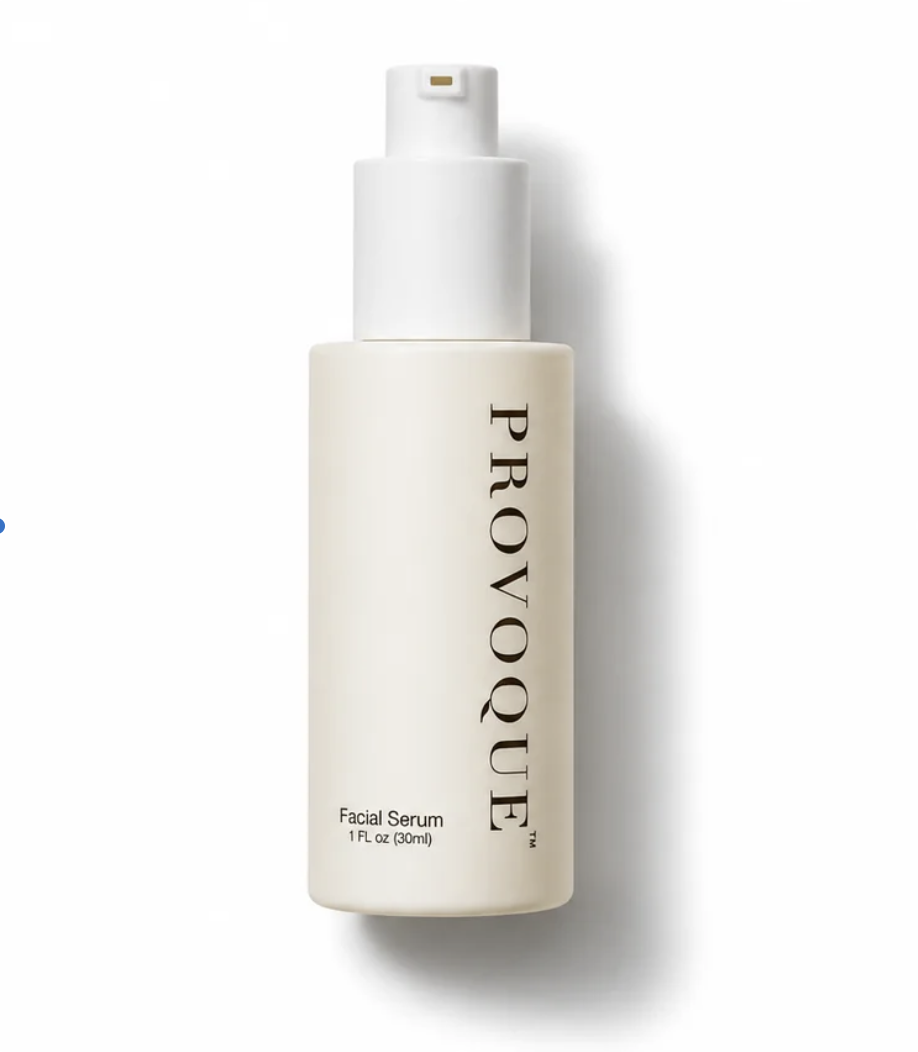
One product we’ve incorporated into select SKM regenerative skin protocols is PROVOQUE Facial Serum.
And the science behind it is worth understanding.
First, What Is a Secretome?
Cells don’t function in isolation.
They communicate.
As cells carry out their normal functions, they release a complex collection of biologically active substances into their surrounding environment. Collectively, these secreted substances are referred to as the secretome.
The PROVOQUE formulation described by its manufacturer contains a skin-progenitor-cell-derived secretome that includes skin-specific growth factors, naturally occurring exosomes and Fetuin-A.
Instead of building a formula around a single signaling molecule, the concept is to preserve a more complex collection of signals produced by skin-specific cells.
That’s what makes secretome-based skincare particularly interesting from a regenerative-aesthetics perspective.
What Are Growth Factors?
Growth factors are naturally occurring signaling proteins involved in communication between cells.
They participate in processes related to tissue maintenance, repair and remodeling.
Your skin naturally uses these signaling pathways throughout life. But like many aspects of skin biology, the environment in which those signals operate changes with age, UV exposure and other sources of stress.
This is why growth-factor technology has become an area of interest in regenerative skincare.
But growth factors are only one component of PROVOQUE’s formulation.
And What About Exosomes?
Exosomes are tiny extracellular vesicles involved in cell-to-cell communication.
Think of them less like an ingredient that simply sits on the surface of the skin and more like one part of a biological communication system.
PROVOQUE’s skin-specific secretome contains naturally occurring exosomes alongside growth factors and Fetuin-A.
That distinction matters because not every product marketed around “exosomes” is biologically identical. Cell source, processing, formulation and clinical evidence all matter when evaluating these technologies.
The Part We Find Particularly Interesting: Fetuin-A
One of the more unusual components of the PROVOQUE story is a protein called Fetuin-A, also known as alpha-2-HS-glycoprotein.
According to the PROVOQUE scientific training materials, Fetuin-A is present alongside the growth factors and naturally occurring exosomes within its skin progenitor secretome. The materials describe it as having roles related to protecting and transporting these components.
This became an important part of the research behind the formulation and ultimately led to published investigation of the skin-progenitor-cell-derived material.
And this is where the story becomes more interesting than marketing.
It was actually studied.
Has PROVOQUE Been Clinically Studied?
Yes.
The scientific material supporting PROVOQUE cites a 12-week, independent, double-blind, four-arm clinical trial involving 100 participants.
Participants applied the topical formulation to the face twice daily.
Researchers didn’t simply ask participants whether they thought their skin looked better.
The study included investigator assessments as well as objective measurements and histologic evaluation. Evaluated areas included lines and wrinkles, firmness, radiance, texture and overall appearance, along with measurements such as transepidermal water loss, corneometry and photography.
The research was published as:
Nistor G, Poole AJ, Draelos Z, et al. Human Stem Cell-Derived Skin Progenitors Produce Alpha 2-HS Glycoprotein (Fetuin): A Revolutionary Cosmetic Ingredient. Journal of Drugs in Dermatology. 2016;15(5):583-598.
What Did Researchers Find?
This is the part of the research we find particularly compelling.
Histologic evaluation demonstrated statistically significant changes involving collagen, filaggrin and rete pegs after the 12-week study period.
Why does that matter?
Collagen contributes to the skin’s structural framework.
Filaggrin plays an important role in normal epidermal barrier function.
Rete pegs are part of the architecture connecting the epidermis and dermis and contribute to structural integrity.
The study materials specifically report a 25% increase in collagen production on histologic evaluation after 12 weeks of twice-daily topical use.
That is a much more interesting finding to us than simply saying a product makes skin “glow.”
It gives us a biological reason to pay attention.
Does That Mean PROVOQUE Reverses Aging?
No.
And this distinction matters.
Aging is a complex biological process influenced by genetics, UV exposure, hormones, inflammation, environmental exposures, lifestyle and time itself.
No serum stops that process.
We also don’t believe one study should be interpreted as proof that a skincare product can reproduce every effect of youthful skin or guarantee a particular cosmetic result for every patient.
Instead, we look at PROVOQUE as one potentially useful tool within a much larger strategy for supporting skin quality and skin longevity.
That distinction reflects our philosophy at SKM.
We’re not trying to “fight aging.”
We’re trying to understand what changes in the skin over time and make thoughtful decisions about what may support it.
Where Does PROVOQUE Fit Into Regenerative Aesthetics?
This is where skincare and in-office treatments begin to connect.
At SKM, we don’t think of skincare and procedures as completely separate worlds.
A patient might receive regenerative microneedling, for example, but what happens during one appointment is only one part of that patient’s overall skin strategy.
Their daily skincare matters.
Sun protection matters.
Barrier health matters.
Consistency matters.
Treatment selection matters.
And sometimes biologically active skincare becomes another part of that plan.
The manufacturer’s clinical materials position PROVOQUE for daily skincare as well as use around selected aesthetic procedures, including as complementary care with treatments such as microneedling.
Importantly, that doesn’t mean we automatically recommend it to every patient or apply it indiscriminately immediately after every procedure.
The treatment, the condition of the skin and the timing all matter.
How Do You Use PROVOQUE?
For routine home use, the manufacturer’s protocol recommends one to two pumps on clean skin twice daily and describes use on areas including the face, neck, décolleté and hands.
At SKM, however, we don’t believe good skincare requires replacing everything you already own.
If you already have an appropriate cleanser, antioxidant, moisturizer or sunscreen, we would rather evaluate what you’re using and identify the gaps than sell you an entirely new shelf of products.
Less, but better.
That’s as true for skincare as it is for injectables.
The SKM Approach to Regenerative Skin
Regenerative aesthetics is exciting precisely because the field is evolving.
But new doesn’t automatically mean better.
Terms like exosomes, growth factors and regenerative can sound impressive without telling you very much about the quality of a formulation or the evidence behind it.
That’s why we look deeper.
What is the biological source?
What’s actually in the formulation?
Has it been studied?
What did the study measure?
Does it make sense for this particular patient’s skin?
Those are the questions that matter more to us than the trend of the moment.
PROVOQUE is one tool within that philosophy.
Because at Skin Kare Magic, regenerative aesthetics isn’t about chasing youth.
It’s about becoming more intelligent about how we care for skin over time.
References
Nistor G, Poole AJ, Draelos Z, et al. Human Stem Cell-Derived Skin Progenitors Produce Alpha 2-HS Glycoprotein (Fetuin): A Revolutionary Cosmetic Ingredient. Journal of Drugs in Dermatology. 2016;15(5):583-598.


